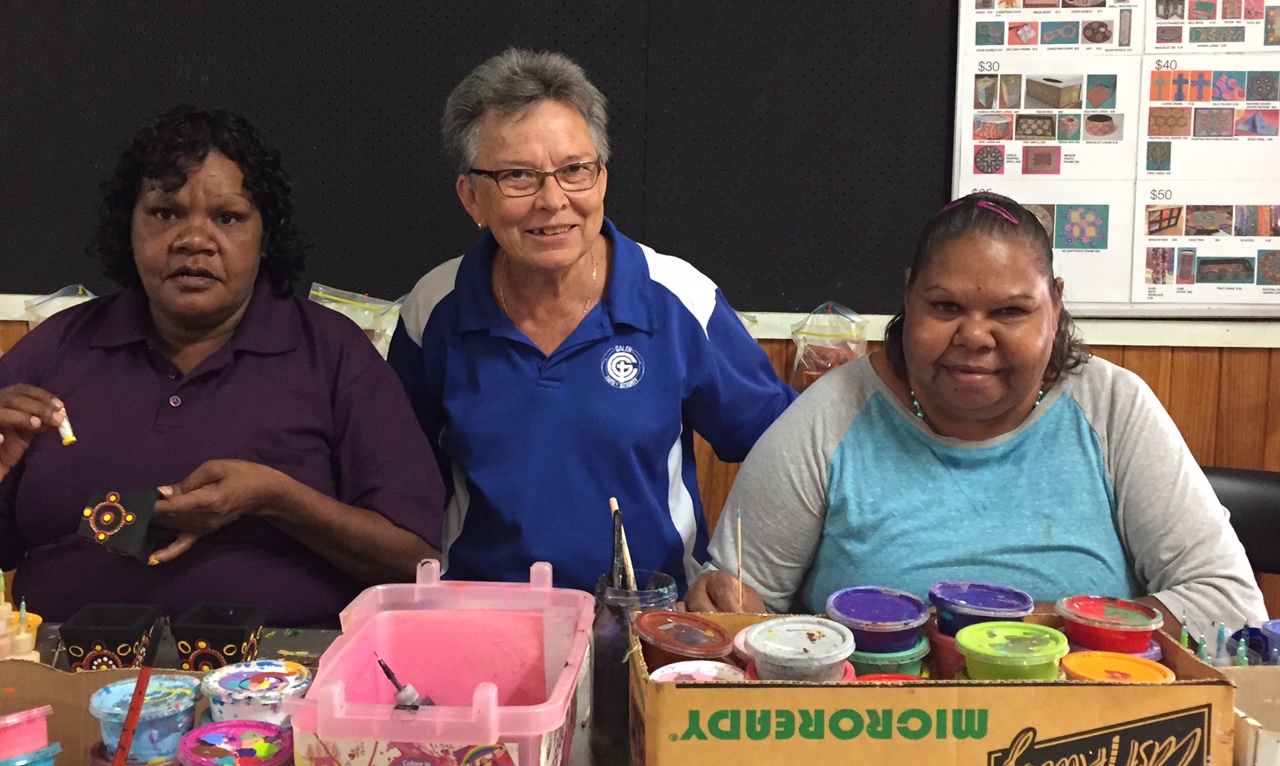
Jocelyn and Cheryl with Sister Liz Wiemers SGS at the Santa Teresa Spirituality Centre
Concern and compassion for Australia’s First People is clearly evident in the ministry, letters and public statements of Archbishop Polding. He spoke out strongly against the injustices of removing these people from their lands and depriving them of their livelihood.
We had dispossessed the aboriginals of the soil…. In natural justice, then, we are held to compensation. Alas! It is shocking to think of what has, in fact, been done…. The strain of blood is upon us – blood has been shed far otherwise than in self-defence – blood in needless and wanton cruelty. Shall we not protest against this?
– Joint Pastoral Letter, Polding and Australian Bishops, 1869.

Smoking Ceremony, Mercy Parish, Palm Island – Sister Robyn Brady SGS, Father Emmanuel and Elder Ralph Watson
Today, Good Samaritans express this commitment in various places with local Indigenous people. We do this more deliberately by living and working in places such as Santa Teresa in Central Australia.